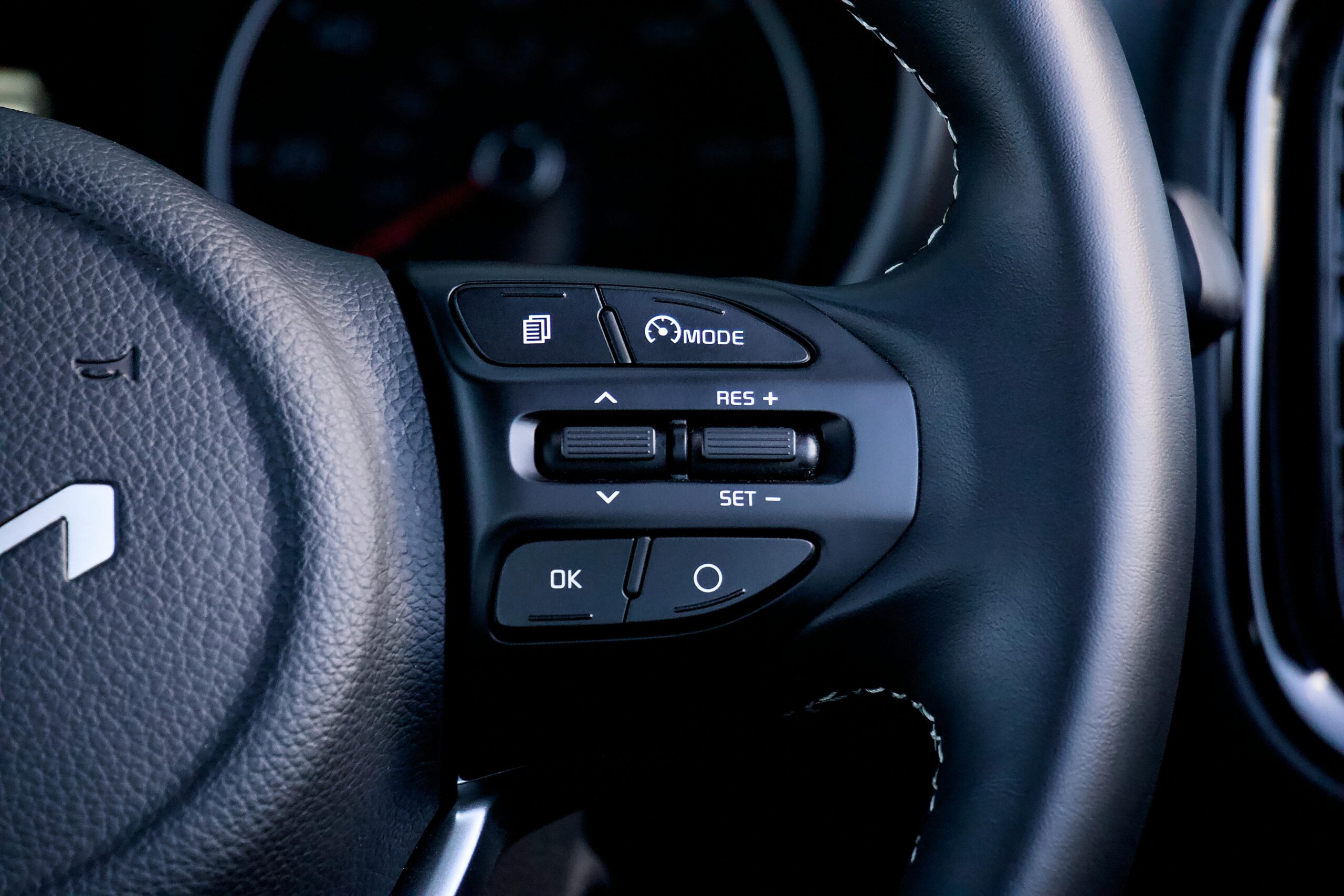
Your Car’s Invisible Co-Driver, Explained
What Does Adaptive Cruise Control Feel Like?
Just like how I debugged my wireless mouse lag issue, understanding how systems work under the hood changes your perspective.
Ever wondered how adaptive cruise control works?.
Imagine this. You’re on the Chennai–Bangalore expressway, it’s 6 AM, the road is smooth, and you’re cruising at 100 km/h. A truck ahead is doing 70. Your foot moves to the brake… but wait. The car has already slowed down on its own.
No beep. No panic. The car quietly reduced speed, matched the truck’s pace, kept a safe gap, and the moment the truck moved to the left lane, your car silently accelerated back to 100.
That’s Adaptive Cruise Control (ACC) doing its thing. And honestly, until I dug into how this works, I had no idea how beautifully engineered this system is.
This blog is my attempt to understand ACC from the ground up — the sensors, the brains, the decision-making — and explain it in a way that both a curious teenager and a petrol head can enjoy. And yes, there’s a Geek Zone for those who want the technical numbers.
Table of Contents
Cruise Control vs Adaptive Cruise Control — What’s the Difference?
Before we talk adaptive, let’s talk basic. Regular cruise control has been around since the 1950s. Here’s what it does: you set a speed, say 80 km/h, and take your foot off the accelerator. The car maintains that speed.
Simple. Useful. But also, a bit dumb.
Because if a slower vehicle appears ahead, regular cruise control doesn’t care. It will happily keep pushing 80 km/h straight into the back of that vehicle. YOU must brake. YOU must cancel cruise. YOU must re-engage it once the road is clear.
Now think about doing this repeatedly on a 4-hour highway drive. That’s exhausting.
| 💡 Think of it this way: Regular cruise control is like setting an alarm — it rings at the same time no matter what. Adaptive cruise control is like a smart alarm that checks your calendar and adjusts itself. |
How Adaptive Cruise Control Works — Step by Step
Adaptive Cruise Control (ACC) is the evolved version. You still set a speed. But now, you also set a following distance — how far you want to stay behind the car in front.
The system then uses sensors (radar, cameras, or both) to constantly monitor the vehicle ahead. If that vehicle slows down, your car slows down automatically. If the road clears up, your car speeds back up to the set speed. All without you touching a pedal.
Some advanced systems even handle stop-and-go traffic — they’ll bring your car to a complete stop in a jam and start moving again when traffic flows. This is a massive comfort upgrade on Indian expressways where you might encounter a sudden toll plaza backup.
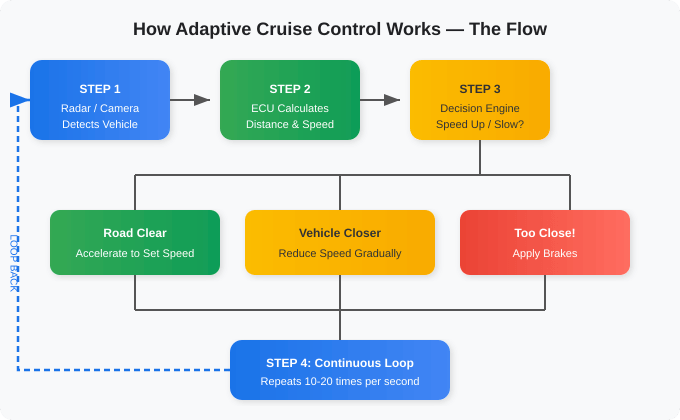
Figure 1: The ACC Decision Loop — Sense, Calculate, Act, Repeat
Sensors Used in Adaptive Cruise Control — Radar, Camera & LiDAR
ACC isn’t magic. It’s science. And the science starts with sensors. Your car needs to “see” the road ahead, and there are three main ways it does this.
1. Radar — The Workhorse
Most ACC systems, especially in Indian cars like the Mahindra XUV700, Tata Harrier, or Hyundai Creta, use a radar sensor mounted behind the front bumper or grille. This radar sends out radio waves that bounce off the vehicle ahead and return. The system calculates how far away the vehicle is and how fast it’s moving based on the time delay and frequency shift of the returned signal.
Radar is the preferred choice for ACC because it works reliably in rain, fog, dust, and even at night — conditions that cameras alone struggle with.
2. Camera — The Observer
A forward-facing camera, usually mounted near the rearview mirror, provides visual data. It can read lane markings, identify vehicle types, and even recognize traffic signs. While cameras alone can run ACC (Subaru’s EyeSight and Tesla’s Vision are camera-only systems), they don’t perform as well in poor visibility.
3. LiDAR — The Premium Option
LiDAR (Light Detection and Ranging) uses laser pulses to create a precise 3D map of the surroundings. It’s the most accurate but also the most expensive, which is why you’ll mostly find it in premium or autonomous driving test vehicles. For most consumer ACC systems in India, radar plus camera is the standard combo.
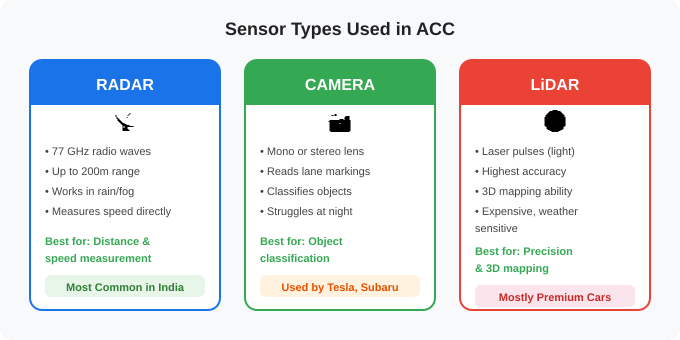
Figure 2: The Three Sensor Types Used in ACC Systems
How Radar Detects Distance and Speed in ACC
Since radar is the backbone of most ACC systems, let’s understand how it works.
The radar sensor emits radio waves at a specific frequency. These waves travel at the speed of light, hit the vehicle ahead, and bounce back. By measuring the time it takes for the wave to return, the system calculates distance. And by measuring the change in frequency of the returned wave (this is called the Doppler effect — the same reason an ambulance siren sounds different as it approaches vs. moves away), the system calculates relative speed.
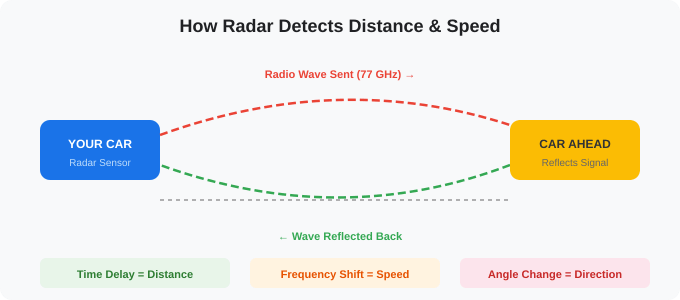
Figure 3: How Radar Measures Distance and Speed Using Wave Reflections
This combination of distance + speed + direction is enough for the system to make intelligent decisions about whether to maintain speed, slow down, or brake.
The ECU — How Your Car’s Brain Makes ACC Decisions
Sensors are the eyes. But the brain of the operation is the Electronic Control Unit (ECU) — a small but powerful computer that processes all the sensor data in real-time.
Here’s what happens inside the ECU in a fraction of a second:
1. Data In: Radar sends distance, speed, and angle data. Camera adds object classification (is it a car? truck? motorcycle?).
2. Compare: The ECU compares the current gap with the driver’s set following distance.
3. Decide: If the gap is shrinking, slow down. If the gap is growing or the road is clear, speed up to the set speed.
4. Execute: The ECU sends commands to the throttle (to accelerate) or the braking system (to decelerate). In modern cars, this is done electronically through drive-by-wire systems.
5. Repeat: This entire cycle runs 10 to 20 times every second, creating a smooth, continuous adjustment that feels natural to the driver.
| 🚗 The beauty of ACC is that you, the driver, don’t feel the computation. You just feel the car gently slowing down or speeding up as if it’s reading your mind. But behind the scenes, hundreds of calculations are happening every second. |
Does Adaptive Cruise Control Work on Indian Roads?
Now here’s where things get interesting. ACC was designed primarily for well-marked highways with disciplined traffic. Indian roads… are a different story.
Where ACC Shines in India
Expressways: On the Mumbai-Pune Expressway, Chennai-Bangalore Highway, or Yamuna Expressway, ACC is genuinely useful. Traffic flow is relatively predictable, and the system handles highway cruising beautifully.
Long drives: On a 6-hour highway drive, ACC significantly reduces fatigue. Your right foot gets a break from the constant accelerate-brake cycle.
Where ACC Struggles in India
Chaotic city traffic: Auto-rickshaws cutting in, two-wheelers weaving, pedestrians crossing — most ACC systems aren’t designed for this level of unpredictability. The system may brake too aggressively or too late.
Poorly marked roads: Camera-based lane detection needs visible lane markings. Many Indian highways still lack consistent markings, especially in rural stretches.
Dust and rain: While radar handles weather better than cameras, heavy dust on sensor covers or monsoon rain can occasionally affect performance.
Sudden cut-ins: When a vehicle suddenly cuts into your lane at close range, the system has very little time to react. This is common on Indian roads where lane discipline is, let’s say, a suggestion rather than a rule.
| ⚠️ Important: ACC is a driver ASSIST feature, not a self-driving feature. You must always keep your hands on the wheel and your eyes on the road. ACC reduces workload — it doesn’t replace the driver. |
ACC in the Bigger Picture — Levels of Automation
You’ve probably heard terms like “Level 2 Autonomy” being thrown around. Here’s where ACC fits in the SAE (Society of Automotive Engineers) levels of driving automation:
At Level 0, the driver does everything. At Level 1, the car can control either speed (ACC) or steering (Lane Keep Assist), but not both simultaneously. At Level 2, the car handles both speed and steering together — this is where cars like the XUV700 and Tata Harrier sit with their full ADAS suites. Beyond that, Levels 3-5 move into territory where the car can drive itself in certain or all conditions — but we’re not there yet in India.
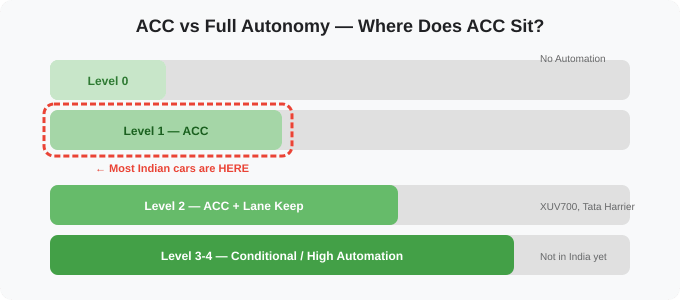
Figure 4: Where ACC Sits in the Automation Spectrum
Indian Cars with Adaptive Cruise Control in 2026
ACC is no longer limited to luxury imports. Here are some popular models available in India that offer Adaptive Cruise Control:
Mahindra XUV700 — One of the first mass-market Indian cars with Level 2 ADAS including ACC, lane keep assist, and automatic emergency braking.
Tata Harrier & Safari — The facelifted versions come with ACC and a suite of ADAS features in higher trims.
Hyundai Creta & Tucson — Hyundai offers ACC as part of their SmartSense ADAS package.
MG Astor — Offers Level 2 ADAS with ACC and is one of the more affordable options.
Honda City & Elevate — Honda’s SENSING suite includes ACC from higher variants onward.
Kia Seltos & Sonet — Kia’s ADAS package includes ACC in their higher trims.
The trend is clear — ACC is moving from being a premium-only feature to becoming a mainstream safety expectation.
| GEEK ZONE — For the Technically Curious |
If you’ve made it this far and want the technical meat, this section is for you. Let’s talk numbers, frequencies, algorithms, and engineering trade-offs.
Radar Specifications
Most modern ACC radars operate in the 76–77 GHz band (W-band). Older systems used 24 GHz (K-band), but the industry has moved to 77 GHz because it offers better resolution with a smaller antenna size. The typical specifications are: maximum detection range of around 200 meters, range resolution of approximately 1 meter, and a field of view of about 18–20 degrees for long-range and up to 60 degrees for short-range sensors.
The radar uses a technique called FMCW (Frequency Modulated Continuous Wave). Unlike pulsed radars (used in defence), FMCW radars are smaller, consume less power, and are much cheaper to manufacture — which is why they’re ideal for cars. The radar continuously transmits a signal whose frequency increases linearly over time (a “chirp”). When this chirp bounces off a target and returns, the frequency difference between the sent and received signals (called the “beat frequency”) reveals the target’s distance.
The Doppler Effect in ACC
The Doppler shift is crucial for measuring relative speed. If the car ahead is moving away from you, the reflected wave’s frequency drops slightly. If it’s approaching (or you’re closing in), the frequency increases. At 77 GHz, a target moving at 100 km/h produces a Doppler shift of approximately 14.3 kHz — easily measurable by the radar’s signal processor.
The maximum detectable speed for a typical ACC radar is around 230 km/h (relative velocity between the two vehicles), which is more than sufficient for any road scenario in India.
The Control Algorithm — PID and Beyond
Once the radar gives the ECU the distance and relative speed, a control algorithm decides how much to accelerate or brake. The most common approach is the PID (Proportional-Integral-Derivative) controller.
In simple terms: the Proportional component reacts based on how far the current gap is from the desired gap. The Integral component accounts for accumulated error over time (preventing the car from consistently being slightly too close or too far). The Derivative component predicts future error based on the rate of change, enabling smoother responses. Two separate PID controllers often manage throttle and brake independently.
More advanced systems use Model Predictive Control (MPC) which can optimize for multiple objectives simultaneously — safety, comfort, and fuel efficiency. MPC-based systems have shown up to 13% improvement in fuel economy compared to PID-based systems in research studies.
Time Headway — The Safety Math
When you set the “following distance” on your ACC, you’re actually setting a time headway — measured in seconds, not meters. Common settings are 1.0, 1.5, 2.0, or 2.5 seconds.
What does this mean? If you’re travelling at 100 km/h (about 27.8 m/s) with a 2-second time headway, the system maintains a gap of approximately 55.6 meters. At 60 km/h, the same 2-second setting maintains a gap of about 33.3 meters. The gap dynamically adjusts with speed, which is smarter than maintaining a fixed distance.
Sensor Fusion — The Best of Both Worlds
Modern vehicles don’t rely on a single sensor. They use sensor fusion — combining radar and camera data to get a more reliable picture. Radar excels at distance and speed measurement but can’t tell you if the object ahead is a car, a truck, or a road sign. The camera can classify objects visually but struggles in bad weather or low light. By fusing both data streams, the ECU gets both the “where and how fast” from radar and the “what is it” from the camera.
Some premium systems even add short-range corner radars for detecting vehicles entering from adjacent lanes — giving the system a wider field of awareness for highway driving.
Update Rate
The radar sensor typically updates at 10–20 Hz (10 to 20 measurements per second). Each measurement cycle involves transmitting about 64 chirp sweeps, processing the range-Doppler response, and extracting target information. This entire pipeline runs in under 50–80 milliseconds, making the system responsive enough for real-world driving scenarios.
Key Takeaways
ACC is not magic — it’s radar waves, cameras, smart algorithms, and fast processors working together in a loop that runs multiple times per second.
Radar operating at 77 GHz is the backbone of most ACC systems, capable of detecting vehicles up to 200 meters away and measuring their speed using the Doppler effect.
The ECU uses control algorithms like PID or MPC to smoothly manage your car’s throttle and brakes, mimicking natural driving behaviour.
ACC works best on highways and expressways. Indian city traffic remains a challenge, but the technology is improving with local tuning and better sensor fusion.
It’s a Level 1 or Level 2 assist — it helps the driver, it doesn’t replace them. Stay alert, always.
Final Thoughts
Writing this post taught me something I didn’t fully appreciate before — the sheer engineering elegance behind a feature that most people dismiss as “just cruise control with extra steps.” The fact that a small sensor behind your bumper is sending radio waves 20 times a second, measuring their return, calculating distances and speeds, feeding that into a control loop, and smoothly adjusting your throttle and brakes — all while you’re sipping coffee and enjoying the drive — is remarkable.
If you’re buying a car in 2026, I’d strongly recommend looking for one with ACC. Not because it’s a fancy spec-sheet number, but because on that one long highway drive, when your legs are tired and your attention is fading, this invisible co-driver might just make the difference.
And if you already have it in your car, actually use it. You’ll wonder how you ever drove without it.
Next up: How Lane Keep Assist Works — the other half of Level 2 autonomy.
Good day to you 🫡.
If you’re starting your own blog, make sure you set up indexing properly so your content actually gets found.
Leave a Reply